ERB CTP Test
What is the ERB CTP Test?
The ERB CTP (Comprehensive Testing Program) is a standardized assessment used by independent schools to measure student achievement and academic growth across key subjects. Taken by students in grades 1–11, it evaluates skills in reading, writing, mathematics, and reasoning.
I’m Sarah Kemp, an assessment specialist with years of experience developing test prep materials and guiding students to success on exams like the ERB CTP. My goal is to build your child's confidence by focusing on the underlying reasoning and subject-matter expertise required to excel on the CTP 5.
What's on this page:
- Detailed sample questions with step-by-step explanations
- Expert tips for each question type
- Key test information and scoring details
- Frequently Asked Questions about the ERB-CTP Test
The CTP 5 (5th edition) is the current version, emphasizing critical thinking and reasoning skills alongside academic knowledge.

How Can Sample Questions Help You Prepare?
Practicing sample questions is one of the best ways to master any test. It allows your child to get familiar with specific question types, build "test-day stamina," and learn how to approach each section with a clear strategy.
Mastering Reading Comprehension
The Reading Comprehension section, aligned with Common Core Standards, evaluates skills in text analysis, identifying main ideas, and determining an author’s purpose. Let’s start with a Grade 3 level challenge.
Question 1: Reading Comprehension Grade 3
Read the passage.
Antarctica is the earth's southernmost continent. On average, it is the coldest, driest, and windiest place on earth. The average temperature during the coldest part of the year there is −81 °F.
Antarctica was first sighted only in 1820 by a Russian expedition, and there is no evidence that it was seen by humans until then. In 1895, the first confirmed landing was conducted by a team of Norwegians. Nowadays, there are only 1000 to 5000 temporary residents in Antarctica throughout the year. These are mainly scientists and tourists.
What is most likely the reason there are only temporary residents in Antarctica throughout the year?
Get Your ERB-CTP Test PrepPack
Refining Writing Mechanics
Now that we’ve tackled reading, let’s pivot to the "nuts and bolts" of language. This Grade 5 question checks for proper pronoun usage which isa common stumbling block for many students.
Question 2: Writing Mechanics Grade 5
Read the following sentence on the left and answer the corresponding question on the right:
Some members of my extended family were selected to speak at the party, including _____________.
Which of the following options completes the sentence on the left properly?
Visualizing Success in Mathematics
Moving from words to numbers, let’s test spatial reasoning. This Grade 4 question is aligned with Common Core Mathematics Standards and requires you to analyze a graph to find the solution.
Question 3: Mathematics Grade 4
Use the graph to answer the question.
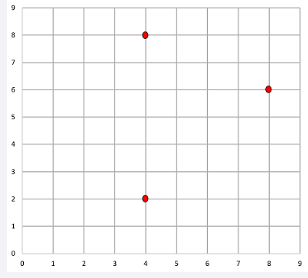
A parallelogram is formed by connecting the three points drawn to a missing fourth point.
What are the coordinates of the missing point?
If your child is in 3rd grade try these free math resources.
Thinking Logically: Verbal Reasoning
Let’s switch gears again. Verbal reasoning isn't just about vocabulary; it’s about finding patterns and drawing logical conclusions from provided information. This is a chance for your child to demonstrate their ability to think critically and logically with language.
Question 4: Verbal Reasoning Grade 4 or Grade 5
Julietta is told that due to a mild deficiency in iron, she should have a portion of red meat one meal a day. Julietta then discovers that her friend Raquel has a more serious deficiency in iron.
Based on the information provided, what would make the most sense for Julietta to advise Raquel?
Testing Logical Assumptions
Building on those verbal skills, let’s look at how logic applies to real-world scenarios. This alternate question tests a student's ability to identify a "logical assumption" based on a change in circumstances.
Question 5: Verbal Reasoning Grade 5
Raquel carried four bags of groceries home from the local supermarket, each weighing about the same, and she just barely made it home before she had to put them down and rest her arms. She began lifting weights to make her task easier, and after some time, noticed that she could lift things more easily.
Which of the following is a logical assumption for Raquel to make?
Now, let’s apply that logic to data. Building on those logical skills, let's now turn our attention to quantitative reasoning.
Want more practice like this?
Our Prep Packs include hundreds of verbal and logic puzzles designed to sharpen your child's reasoning.
Quantitative Reasoning is about using numbers and mathematical concepts to solve puzzles. Instead of just performing calculations, students must analyze a set of rules to find a solution.
Question 6: Quantitative Reasoning Grade 5
Six friends are lined up from left to right in order of tallest to shortest. They are measured to the nearest whole inch and none of them share the same height. Justin is the tallest, Monica is 5’9”, Raj is to the right of Katie, Julio is next to Justin, Raheem is next to Monica, and Katie is three inches shorter than Raheem.
A. Raheem's height
B. 6 feet
Which statement is true?
Math Communication Questions - Avaliable on CTP 4
What Makes Math Communication Questions Special?
Available on the CTP 4, these questions go beyond multiple choice. To earn full points, students must "show their work" and explain their logic using words or diagrams.
Math Communication Question Grade 3
Tara is organizing a book drive. She collected 180 books and wants to distribute them equally among 12 local libraries. How many books will each library receive? Explain your reasoning using calculations and words.
We are excited to introduce a study guide to help you prepare for Math Communication Questions. We also have included two quizzes for you to practice in our test prep packs.

Want Additional Free Practice? Try Our 3rd Grade Interactive Sample Test
ERB CTP Free Sample Test for 3rd Grade
10 High-Quality Questions: Hand-picked to mirror the actual 3rd-grade ERB CTP format.
Interactive Experience: Get your child comfortable with the digital testing environment.
Try Before You Buy: See exactly how our practice materials work before committing to a full purchase.

What Is the ERB CTP 5 Testing:What Parents Need to Know?
The ERB CTP is a standardized test used by many independent schools. It measures student performance in subjects like reading, math, writing, and reasoning.
What Subjects Are Tested on CTP 5?
Core Tests (Most Grades)
-
- Reading Comprehension (Grades 1-11)
- Mathematics (Grades 1-11)
- Writing Mechanics (Grades 2-11)
- Writing Concepts and Skills (Grades 3-11)
- Verbal Reasoning (Grades 3-11)
- Vocabulary (Grades 4-11)
- Quantitative Reasoning (Grades 3-11)
- Science (Grades 3-9, online only)
Special Tests (Select Grades)
-
- Word Analysis (Grades 1-2)
- Auditory Comprehension (Grades 1-3)
- Algebra 1 (Grades 7-9)
What Is the Difference Between CTP and Milestones Tests?
|
Feature |
CTP (Comprehensive Testing Program) |
Milestones Assessments |
|
Frequency |
Once per year (Annual) |
Multiple times per year (Ongoing) |
|
Duration |
Long-form, comprehensive |
Shorter, focused snapshots |
|
Primary Goal |
Measuring overall achievement and reasoning skills |
Tracking progress and providing teacher feedback |
|
Subjects Covered |
Math, ELA, Science, and Reasoning |
Reading Comprehension and Math only |
|
Grade Levels |
Typically Grades 1–12 |
Primarily Grades 3–8 |
|
Standard Alignment |
Grade-level Common Core Standards |
Targeted curriculum benchmarks |
|
Utility |
Long-term planning and school-wide data |
Immediate instructional adjustments |

How Are CTP Scores Calculated?
Unlike a typical classroom test where a "good grade" is simply the percentage of correct answers, CTP scoring is more nuanced; your child receives two types of scores:
Raw Score: Simply the number of questions answered correctly. Higher numbers = better performance.
Scale Scores: These are the primary data points used to track performance. They are calculated based on both the number of correct answers and the difficulty level of those specific questions.
To understand how your child is performing, it is helpful to look past the "raw score" (the total number of questions answered correctly) and focus on how the CTP calculates mastery. Content mastery is a metric measures how much a student has actually learned in a subject area. It assumes that if the student took a different version of the test with similar difficulty, they would perform in a comparable way.
Understanding the Scoring Metrics
To understand where your child stands, the ERB uses several comparative metrics:
- Percentile Ranks: This indicates how many students in a "norm group" scored the same as or lower than your child. A 70th percentile means your child performed better than 70% of that specific group.
- Stanines: This simplifies performance into a 1–9 scale.
- Stanines 1–3: Below-average.
- Stanines 4–6: Average (representing over half of all students).
- Stanines 7–9: Above-average.
These calculations allow the ERB to generate the Individual Narrative and Subscore Reports.
What Is Considered a Good CTP Score?
What Makes a "Good" Score?
A "good" score is relative to the Norm Group your child is being compared against. These reports move beyond raw numbers to show Relative Performance which is how your child compares to specific "norm groups," such as other independent or suburban schools.
Your child's percentile or stanine will likely be lower when compared to a "stronger" group (like Independent Schools) and higher when compared to a "weaker" group.
Common Norm Groups include:
- Independent Norm (IN): Students at other independent schools.
- Suburban Norm (SN): Students at suburban public schools.
- National Norm (NN): A representative sample of all U.S. students at that grade level.
How Do Schools Use CTP Score Reports?
Schools use score reports to track progress, identify strengths and weaknesses, and guide instruction. Parents can also use them to better understand their child’s performance.
ERB Parent Reports: What You Need to Know
Through the school's reporting (often via ERB 360 Access), parents typically receive one of three reports:
- Individual Narrative Report: Compares your child's relative performance across subtests to various norm groups using graphs.
- Individual Subscore Report: Provides a deeper dive into "Content Strands" (specific skills within a subject) and displays mastery scores.
- Primary Grade Parent Report (for younger students): Uses simpler classifications: Exceeding Expectations, Meeting Expectations, and Developing.
Pay attention to Probable Range. This is an estimate of how your student might perform if the test used a different selection of questions, helping to identify if a score is a true reflection of their skills.
The Bottom Line for Parents:
Look for overlaps in the "Probable Range." If the ranges for two different subjects (like Math and Reading) overlap, your child’s performance in those areas is likely similar. If they do not overlap, it indicates a genuine difference in relative strength between those subjects. They call it Content Mastery. This measures how much a student has learned in a specific area. It estimates how the student would perform on a different version of the test with equally difficult questions.

What Is the Best Way to Prepare for the CTP?
Preparing for the ERB’s Comprehensive Testing Program (CTP 5) is less about "cramming" and more about familiarizing your child with how to apply what they already know. Since the test tracks verbal and quantitative reasoning alongside achievement, the strategy should shift as your child matures.
To give your child a competitive edge, move beyond simple review and use a structured Grade-Specific Prep Pack.
Why Should You Use Test Preparation Packages?
Practice tests help students feel comfortable with the format, reduce test anxiety, and improve performance by reinforcing key skills.
What's included in a ERB-CTP Prep Pack?
- Hundreds of Practice Questions: Extensive coverage across all tests and quizzes. Practice items covering many of the content strands and domains to ensure comprehensive familiarization with the test material.
- Full-Length Domain-Based Tests: These simulate the deep-dive reasoning skills required for the actual CTP.
- Targeted Quizzes: Shorter, focused sessions to help students maintain engagement and sharpen specific skills in math, reading, and reasoning.
- Detailed Explanations: Clear breakdowns for every answer to help students understand the logic behind difficult questions and improve their scale scores.
The subtests your student takes vary depending on their current grade. To ensure the practice is relevant, select the pack that matches your child's upcoming testing level:
Get Your ERB-CTP Test PrepPack
Take the next step toward success! Our targeted prep packs for 3rd Grade, 4th Grade, and 5th Grade offer in-depth practice, expert tips, and detailed explanations to ensure your child is fully prepared for the ERB CTP Test. Choose the pack that's right for you and get started now.
Grade-Specific Preparation Tips
Each level of the CTP introduces new challenges. Here is how to focus your preparation for each specific grade:
At this level, the transition to formal testing is the biggest hurdle.
Master Direction Following: Practice listening to and following complex, multi-step verbal instructions.
Build Reading Stamina: Encourage reading longer passages to prepare for the CTP’s focus on reading comprehension.
Arithmetic Speed: Work on fast recall of basic addition and subtraction to save time for word problems.
Answer Sheet Mechanics: Practice the physical act of bubbling in answers correctly to avoid alignment errors.
In 4th grade, the CTP begins to lean more heavily into "Reasoning" subtests.
Pattern Recognition: Use logic puzzles to help students identify sequences in shapes and numbers.
Vocabulary Expansion: Focus on synonyms and antonyms, as verbal reasoning often tests word relationships.
Inference Training: Ask "why" and "how" questions after reading to move beyond basic factual recall.
Problem Decomposition: Teach your child to break down multi-step math problems into smaller, manageable parts.
5th graders are expected to handle more sophisticated content and tighter time constraints.
Time Management: Use a timer during practice sessions to help your child find a comfortable, steady pace.
Evidence-Based Answers: Practice finding specific sentences in a text that prove why an answer choice is correct.
Mathematical Estimation: Teach "ballparking" techniques to quickly eliminate unreasonable multiple-choice options.
Advanced Writing: Focus on organizing written responses with a clear beginning, middle, and end.
Why Structured Practice Works
Using grade-specific prep packs ensures your child isn't overwhelmed by material they haven't learned yet, while still being challenged by the specific format of the CTP 5.
Reduces "Test Shock": Seeing the layout ahead of time lowers anxiety.
Pinpoints Gaps: Helps you see if they struggle with the content or just the question type.
Builds Resilience: Repeated exposure helps students stay focused during the actual testing window.
Get Your ERB-CTP Test PrepPack
Ready to build your child's confidence and skills? Get started today with our comprehensive test prep packs, specifically designed for students in 3rd, 4th, or 5th grade. Each pack includes everything you need to master the CTP 5 and achieve a great score.

Frequently Asked Questions
The CTP is typically administered once per year, either in fall or spring, depending on your school's schedule. It's designed as a summative assessment to measure year-long learning.
The best preparation includes:
Reviewing grade-level material in all subjects
Taking practice tests to familiarize with format
Practicing reasoning and critical thinking skills
Ensuring adequate rest before test day
CTP scores are compared to other students nationally. Generally:
Stanine 7-9: Above average to superior performance
Stanine 4-6: Average performance
Stanine 1-3: Below average performance
Your percentile rank shows what percentage of students you scored better than.
Results are usually available within 2-4 weeks after testing through the ERB 360 Access portal, which provides detailed score reports and analysis.
Yes, the CTP 5 is aligned with Common Core State Standards, ensuring it measures skills and knowledge relevant to your child's grade level curriculum.
Meet Your Expert: Sarah Kemp

Sarah Kemp combines over 20 years of classroom leadership with deep expertise in curriculum design.
Her postgraduate training and hands-on teaching experience ensure that every question in this Prep Pack is:
- Aligned with real ERB CTP standards
- Designed to build true understanding
- Structured for measurable progress
Her materials are trusted by private schools, charter schools, magnet schools, public schools, homeschooling families, and parents who want results-driven preparation.


